



Last updated: 5 November 2025
Bonfire Night (5 November) can unsettle even confident small dogs. This guide combines UK charity advice with peer-reviewed research so you can plan calmly—before, during and after fireworks.
What the research says
- How many dogs are affected? A PLOS ONE study (n=1,225) found 52% of dogs were at least partly affected by fireworks; most developed fear early in life. (Riemer, 2019)
- Owner-reported what helps most? Survey work indicates counterconditioning (pairing noises with rewards) and relaxation training rank highest among home strategies; gradual desensitisation improves outcomes. (Riemer, 2020 | preprint)
- Sound environment helps (short-term). Classical music can reduce stress markers and barking in kenneled dogs, but effects may habituate within ~1 week—rotate playlists. (Kogan et al., 2012; Bowman et al., 2015)
- For severe cases, speak to your vet. Randomised controlled trials show benefit from dexmedetomidine oromucosal gel and imepitoin for noise-related anxiety; suitability is a veterinary decision.
The day plan (before dark)
- Walk in daylight. Finish exercise well before displays to avoid being caught outside. (Blue Cross)
- Choose mental over maximal. Short scent games or simple training chains (sit–stay–come) help take the edge off without over-tiring. (PDSA)
- Stick to familiar timings. Keep meals and settle times close to normal to reduce uncertainty. (PDSA)
Setting up your home (five quick wins)
- Close curtains & switch on lights to mask flashes. (Dogs Trust)
- Add gentle background sound (TV/radio/playlist) at a comfortable volume; rotate music nightly to avoid habituation. (Dogs Trust; Bowman 2015)
- Create a “safe den”. A blanket-lined crate or open-door carrier in a quiet room; let your dog choose it freely. (RSPCA)
- Secure exits. Don’t leave dogs outside during displays; unexpected bangs can trigger flight. (Blue Cross)
- Stay nearby, keep it low-key. Calm company helps; avoid scolding fearful behaviour. (RSPCA)
During the fireworks
- Choice beats forcing. Some small dogs prefer a cosy hideaway; others settle with gentle contact—both are valid. (Dogs Trust)
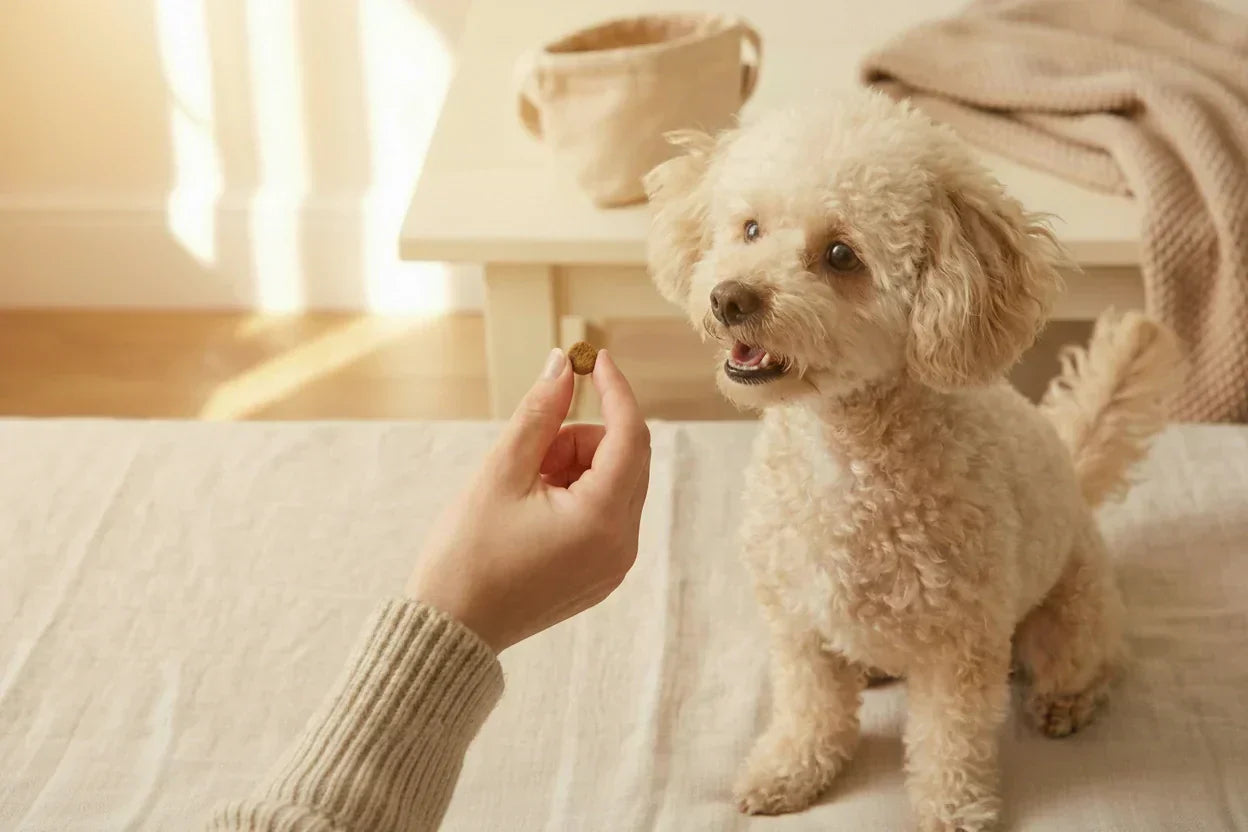
- Keep interactions steady. Quiet praise, slow breathing and easy cue–reward games between bursts (counterconditioning-lite) are sensible. (Riemer 2020)
- Toilet breaks on lead only. Use the garden between volleys; re-secure doors promptly. (Blue Cross)
If your dog struggles
Watch for stress signs (trembling, hiding, startle responses, pacing). Shift to a quieter room, keep lights on and background sound steady. For severe noise aversion, speak to your vet well in advance of firework season—evidence-based options exist:
- Dexmedetomidine oromucosal gel (randomised, placebo-controlled)
- Imepitoin (randomised, placebo-controlled)
- Counterconditioning + desensitisation programmes (owner-reported effectiveness)
The morning after
Firework activity often spills into surrounding weekends. Keep routines calm for a day or two: short sniff-walks, normal feeding, early evening settle time. (Blue Cross)
FAQs
When should I walk my dog on Bonfire Night?
In daylight—finish well before dark to avoid being outside during displays. (Blue Cross)
Is background music helpful?
Yes, at a comfortable volume—and rotate playlists across nights; studies show calming effects can habituate after ~1 week. (Bowman 2015)
Should I comfort my dog or ignore them?
Calm company and choice work best—some dogs settle near you, others prefer a den. Avoid scolding fearful behaviour. (RSPCA)

Leave a comment
This site is protected by hCaptcha and the hCaptcha Privacy Policy and Terms of Service apply.